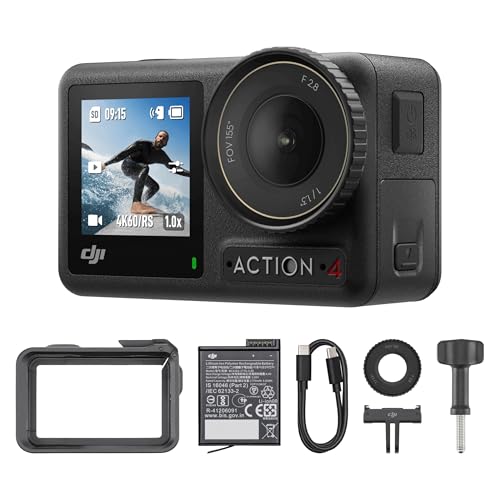
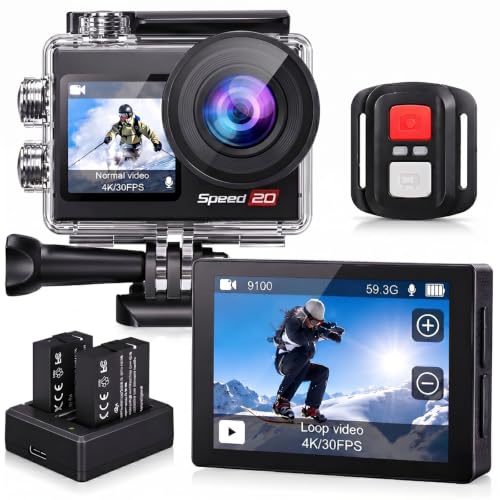
A waterproof action camera is a compact, wide-angle camera sealed at the factory so it can be used in water without a case. This hub explains what that claim does and does not cover once salt, sand and surf impacts are involved, and how to compare models by the things that actually change your footage.
Quick answer: choose a waterproof action camera by its stated depth rating on the maker's page, its stabilization, how easy the controls are with wet hands, and which mounts it supports. Ratings differ by maker: the pages we checked state 33 ft for the GoPro HERO13 Black, 12 m for the Insta360 Ace Pro 2 and 20 m for the DJI Osmo Action 6, all without a case.
Surf camera gear on Amazon
Sponsored
As an Amazon Associate, SurferPix earns from qualifying purchases. See our affiliate disclosure.
A compact camera marketed as waterproof without an added housing, aimed at surfers who want to shoot directly off a board or in hand. Native waterproof claims apply to a sealed, undamaged unit under the manufacturer's specific test conditions.
Reflects criteria around stated stabilization method, touchscreen versus button control for wet hands, and documented battery behavior in warm conditions.
An action camera built around a mechanical stabilization mechanism rather than software-only stabilization, aimed at shooters who want smoother handheld or body-mounted footage. Adds some bulk and a moving part that needs occasional care around sand.
Reflects criteria around mechanical versus electronic stabilization trade-offs and manufacturer-documented storage-card and battery requirements.
A camera favoring physical buttons over a touchscreen for surfers who find wet or gloved touchscreens unreliable mid-session. A reasonable pick for anyone prioritizing control reliability over screen-based menu navigation.
Reflects criteria around physical control layout for wet-hand use and stated overheating behavior, drawn from manufacturer documentation.
An action camera paired with or built around extended battery capacity for surfers who want to film a full session without a mid-water battery swap. Larger battery packs add some bulk and weight to the housing.
Reflects criteria around stated battery life figures and documented behavior when charging or storing in humid coastal conditions.
A waterproof rating is a statement about a sealed, undamaged camera, tested by the maker under specific conditions, usually in still water for a limited time. It is a useful starting point and a poor guarantee. Surf adds forces the rating does not describe: breaking waves, a board striking the camera, warm sun that heats a sealed body, and salt that dries on a gasket between sessions.
The ratings we confirmed on the makers' own pages show how much they vary. GoPro states its HERO13 Black as rugged and waterproof to 33 ft without a housing. Insta360 states 12 m (39 ft) for the Ace Pro 2 straight from the box. DJI states 20 m without a waterproof case and 60 m with its case for the Osmo Action 6. Those numbers are not directly comparable, because the makers do not describe identical test conditions, and several cameras also have rules such as keeping a door closed or a lens guard fitted. Read the footnotes, not just the headline figure.
Our native waterproofing limits article goes through what these ratings mean in surf, where the realistic stresses are impact and seal wear rather than depth.
Ratings as stated on the maker pages we checked; check the figure and conditions.
How to compare waterproof action cameras
Criteria for comparing waterproof action cameras
Criterion
What to read
Why it matters in surf
Depth rating
Figure, conditions and whether a case is required
Sets a limit for a clean, undamaged seal
Stabilization
Electronic or mechanical, and the resolutions it works at
Surf video is shaky; some modes crop or lock out
Controls
Touchscreen, buttons, voice or app
Wet hands defeat many touchscreens
Battery and heat
Stated runtime, any overheating note
Small sealed bodies get hot in the sun
Mounting
Built-in fingers, magnetic or quick-release system
Decides which board mounts and grips you can use
Lens
Replaceable cover or guard
Scratches and drops of water ruin frames
Storage
Card type and required speed
Prevents dropped frames at high resolution
Use the table as a checklist while reading a maker's spec page. If a listing leaves out the depth rating, the mounting system or the card requirement, treat that gap as a reason to look elsewhere.
Criteria from the comparison table.
How to choose for your kind of surfing
Different surfing asks different things of the same camera. Think about how you will carry it.
Board mount. You need a small, light camera that takes direct spray and wave hits, plus a tether. Compare mounts in the surfboard camera mounts hub.
Hand-held in the water. You want a camera that is comfortable to grip, easy to start with one hand and paired with a floating grip. The floating grips hub explains how to read buoyancy claims.
Chest or body mount. Stabilization and field of view matter most, because your body movement adds shake. See chest mount versus clamp mount.
Shore and boat. You can use almost anything, and a larger camera may serve you better. The wider choice is covered on the surf cameras hub.
Many current action cameras are waterproof on their own to a modest depth, so a housing is mainly for deeper dives, extra impact protection or older models. A housing adds a physical buffer, but it also adds weight, can fog, and introduces a second seal that you must maintain. For surfing, where depth is rarely the problem, the camera's own rating usually covers the water you go in, provided you look after the seals.
If you do want a housing, choose one made for your exact camera model, because housings are cut to a specific body shape and button layout. The housings hub explains compatibility, ports and seals, and, for example, GoPro's page states its Protective Housing is waterproof to 196 ft (60 m) and lists the HERO10 through HERO13 Black as compatible.
Surf camera gear on Amazon
Sponsored
As an Amazon Associate, SurferPix earns from qualifying purchases. See our affiliate disclosure.
Prices and availability were accurate when retrieved from Amazon and may change. Retrieved Nov 16, 2026.
Common mistakes
Comparing depth figures across makers as if they were equal. Test conditions differ.
Ignoring door rules. Some cameras need a door closed and locked, or a lens guard fitted, to meet the rating.
Skipping the tether. Waterproof does not mean floating. Many small cameras sink.
Choosing by megapixels or resolution. For surf, stabilization, controls and battery life decide how many clips you keep.
Leaving it in the sun. Heat strains seals and shortens recording. Keep the camera shaded between sets.
Not rinsing. Salt left on seals and buttons shortens a camera's life.
Care in salt water
Rinse the closed camera in fresh water after every salt-water session, pressing the buttons while water runs over them. Dry the ports and body with a clean cloth before you open any door. Open doors only away from the water and out of the wind, so no sand or spray lands on the seal. Inspect the gasket for hair, grit or flattening, and replace it on the maker's schedule if one is published.
Carry a spare battery in a dry pouch and keep cards labelled so you never overwrite footage. A camera that takes a hard knock on a board or reef should be treated as suspect: dry-test it without footage you care about before trusting it again. Never assume a rating survives an impact. No camera listed on this hub is described as immune to flooding, and neither are we describing any housing as leak-proof.
Add a retention tether every time. It costs little and is the difference between a bad wipeout and a lost camera.
A buyer's checklist before you order
Open the maker's page, not a reseller listing. Find the depth figure, the conditions behind it and any footnotes about doors or lens guards.
Check what is in the box. Some bundles include a mount, a battery and a card; others include none, and you will need to buy them before your first session.
Confirm the mount standard. Built-in mounting fingers, a magnetic latch and a quick-release system are different, and an adapter adds a point of failure.
Look at the battery arrangement. A removable battery lets you carry spares; a built-in battery ties your session length to one charge.
Read what happens to stabilization at higher resolutions. Some modes crop the image or are unavailable at the highest settings.
Note the warranty terms. Water damage is commonly treated differently from a manufacturing fault, so read what the maker covers.
Plan the tether and float first. They are cheap and they save the camera.
Spend ten minutes on this list and you will avoid the three most common regrets: a mount that does not fit, a battery that does not last a session, and a camera that sank because nothing held it up.
A short pre-session checklist
Check the door or lens guard is closed and clean, the battery and card are ready, the tether is attached and the lens is wiped. Do a quick test clip on the sand, then rinse the camera after the session. Doing this every time takes a minute and catches most avoidable failures.
What we chose to show here
We chose to name only specifications we could confirm on a maker's own page, and to leave a cell blank when a page did not state a figure. That means this hub does not publish prices, star ratings or review scores, which change constantly and which we do not gather ourselves. For hands-on shopping, the gear strips on this page open Amazon category searches; there you can compare current listings against the checklist above.
If you are brand new to all this, start with the best surf camera for beginners guide, then come back to the table here when you narrow your shortlist.
Frequently asked questions
Are there water-resistant cameras?
Yes. Action cameras are sold as waterproof without a case, and the makers publish a depth rating on each product page. Rugged point-and-shoot cameras are also built for water. Ratings assume a sealed, undamaged camera, so read the conditions on the maker's page.
Can I dive with a GoPro?
Only to the camera's own limit unless you add a housing. GoPro states 10 m (33 ft) for the HERO12 Black without a housing and 60 m (196 ft) with its Protective Housing. Recreational dives often go deeper than 10 m, so a housing is needed for those.
What is the best waterproof camera for surfing?
There is no single best. A compact waterproof action camera with good stabilization and easy controls suits most surfers. Compare stated depth ratings, mount support and battery life on the maker's pages, and plan to add a floating grip and tether.